
Table of Contents
Upgrading to a high-performance Marble Water Jet Cutting Machine is rapidly becoming an industry standard for modern stone fabrication. Over the past five years, waterjet-cut marble installations have surged by 300% in high-end architectural projects, reshaping how fabricators execute intricate stone designs. For global B2B buyers—from specialized stone workshops to large-scale industrial manufacturers—mastering the technical specifications, total cost of ownership (TCO), and import logistics of these machines is vital for protecting profit margins. This comprehensive guide details everything you need to know about sourcing industrial CNC waterjets directly from the factory floor in 2026.
What Is a Marble Water Jet Cutting Machine? (Definition & Core Value)
Defining Ultra-High-Pressure Stone Processing
A marble water jet cutting machine is an advanced industrial tool that uses an ultra-high-pressure stream of water—often mixed with abrasive particles—to slice through dense natural stone. The system relies on a high-pressure intensifier pump, a computerized CNC processing platform, an abrasive supply system, a specialized cutting head, and a cooling unit.
Unlike traditional diamond blades or lasers, this technology’s true value lies in its cold-cutting capability. When evaluating equipment from top industrial stone water jet cutter manufacturers, buyers prioritize systems that generate no thermal distortion. This guarantees zero heat-affected zone (HAZ), material deformation, surface ablation, or alteration to the fragile marble’s physical and chemical properties.
Why Cold Cutting Matters for Natural Stone
Natural marble is highly susceptible to thermal cracking and discoloration when exposed to high-heat friction. By relying on cold-cutting mechanics, a water jet ensures the stone’s structural integrity remains 100% intact. The result is a perfectly smooth, dross-free edge that eliminates labor-intensive secondary processing, accelerating production timelines for complex architectural components.
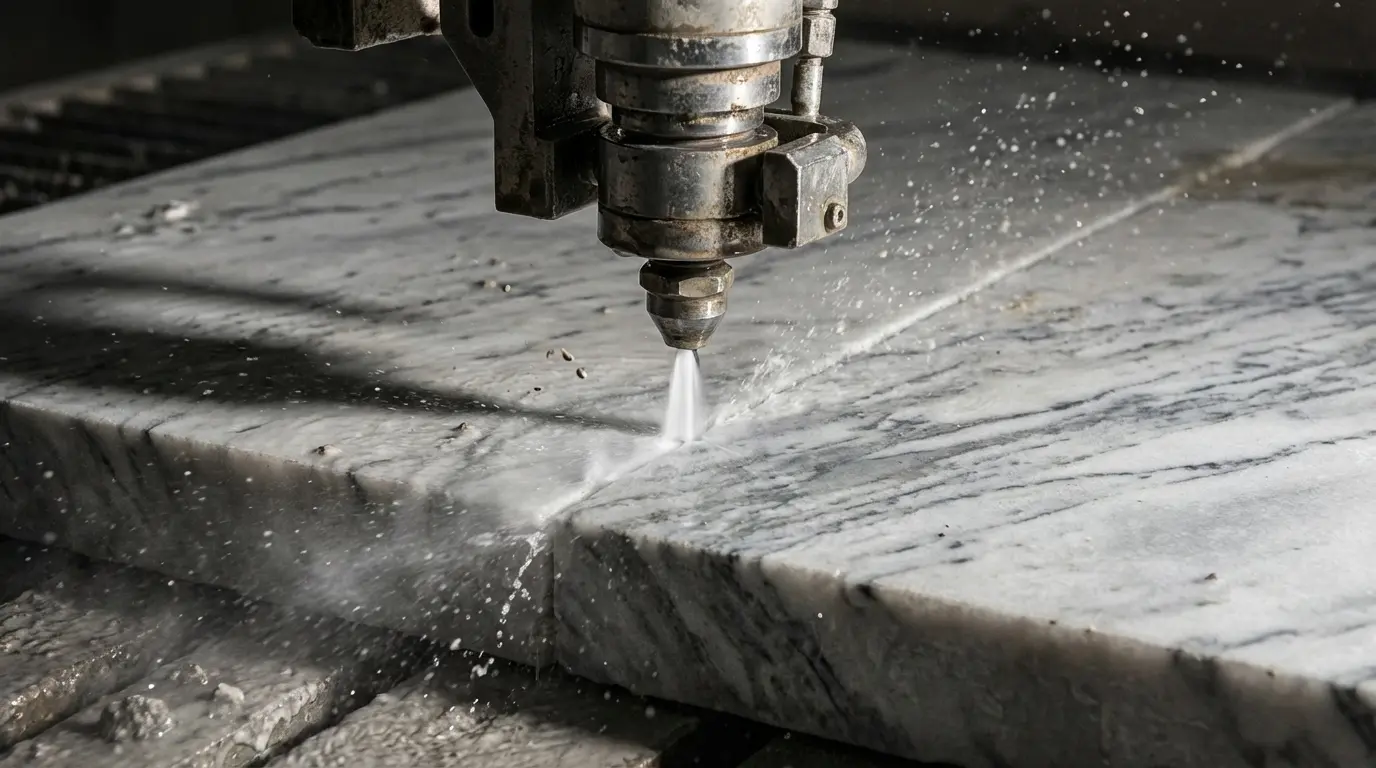
How Water Jet Technology Works: Cold Cutting for Fragile Marble
The Step-by-Step Mechanics of Abrasive Water Jets
To evaluate high-pressure marble cutting machine specifications, buyers must understand the synergy between the intensifier pump and the abrasive delivery system. The process relies on a highly controlled, two-step mechanical sequence:
Step 1: Pure Water Pressurization
The intensifier pump forces clean water through a microscopic sapphire or diamond orifice (typically 0.15 mm to 0.35 mm in diameter). This extreme pressurization—reaching 4,000 bar (58,000 PSI) or higher—converts the water’s static pressure into immense kinetic energy. For soft materials like rubber or foam, this pure water jet alone is sufficient.
Step 2: Abrasive Integration and Cutting
Because marble and granite are hard, brittle materials, pure water isn’t enough. Inside the cutting head’s mixing chamber, an abrasive material (usually 80-mesh garnet sand or carborundum) is drawn into the high-velocity water stream via a Venturi vacuum effect. The water accelerates these abrasive particles to speeds of 800–1000 m/s (roughly two to three times the speed of sound). This abrasive-loaded stream exits the nozzle and erodes the marble at a microscopic level, executing a precise cut without transferring heat to the stonContacte.
3-Axis vs. 5-Axis: Which Type Best Fits Your Production Needs?
Assessing Axis Configurations for Stone Fabrication
Selecting the right axis configuration directly impacts a facility’s production capabilities and return on investment. While both setups utilize the same high-pressure cutting mechanics, their CNC motion control systems dictate the complexity of the final output.
The 3-Axis system (XYZA) is the industry standard for flat, two-dimensional profiling. It operates with moderate efficiency and easily handles parts requiring straight cuts or simple 2D curves. However, it cannot process complex free-form surfaces or execute bevel cuts.
Conversely, a 5-axis CNC water jet for marble mosaics (XYZAB) combines traditional linear motion with two additional rotational axes (A and B). This enables the cutting head to tilt and rotate, actively compensating for the natural V-shaped taper of the water stream. The 5-axis system achieves one-step forming, delivering perfectly vertical, taper-free edges at a strict ±0.05mm accuracy.
Technical Comparison Table
| Feature | 3-Axis Water Jet | 5-Axis Water Jet |
|---|---|---|
| Motion Axes | X, Y, Z (Linear) | X, Y, Z + A, B (Rotational) |
| Primary Application | Basic slab cutting, simple 2D shapes, rough sizing. | Complex mosaics, mitre cuts, sink cutouts, sculpted reliefs. |
| Precision & Edge Quality | Standard (slight natural taper at the bottom of the cut). | Ultra-high (±0.05mm accuracy, automatic taper compensation). |
| Complexity Capacity | Low to Moderate. | High (cuts complex curved surfaces at any angle). |
| ROI Impact | Lower initial cost, requires secondary edge grinding. | Higher initial cost, but reduces subsequent grinding costs by >30%. |
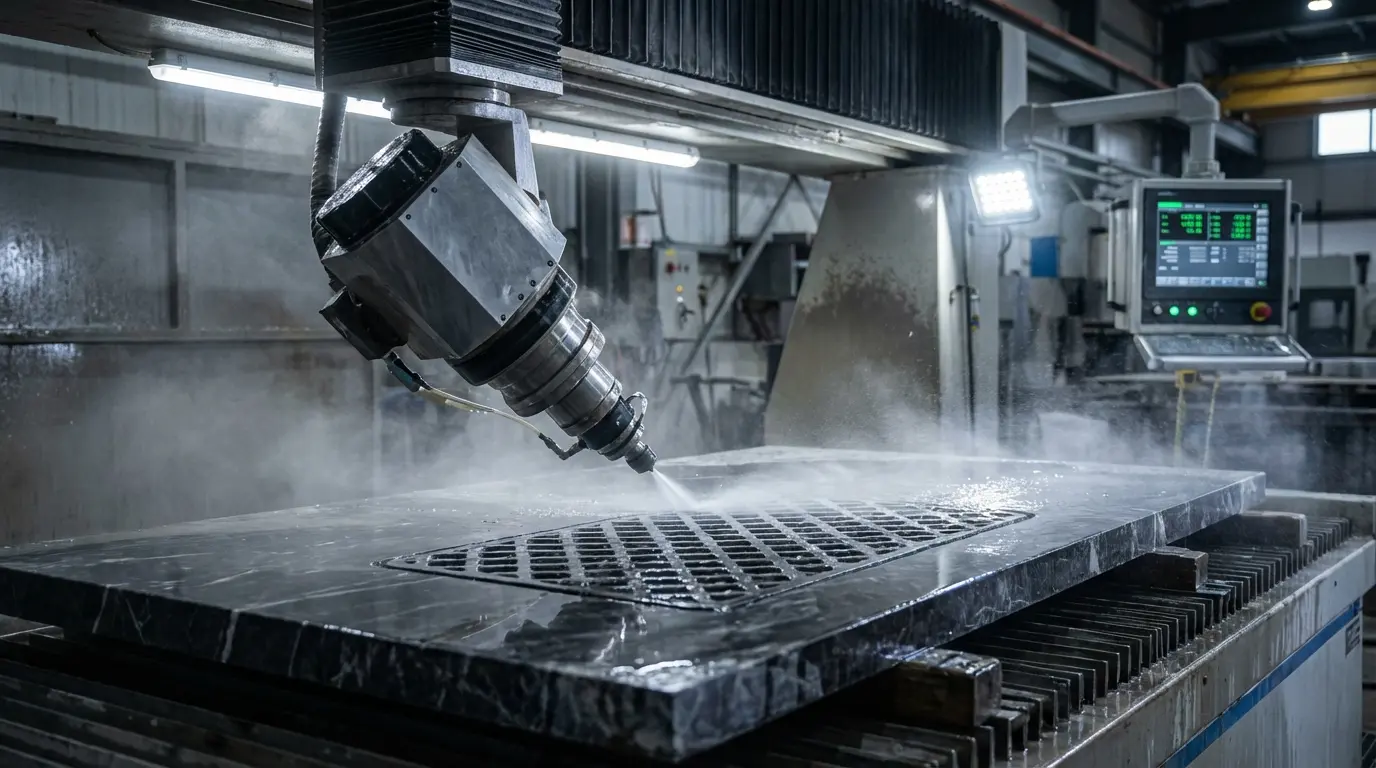
5-axis CNC Marble Water Jet Cutting Machine in action
2026 Wholesale Price List & Total Cost of Ownership (TCO)
Breaking Down the Initial Machine Investment
When sourcing equipment directly from manufacturers, reviewing a comprehensive wholesale marble water jet machine price list is the crucial first step in financial planning. In 2026, factory-direct pricing from China offers significant leverage for global buyers. The average purchase price for a standard industrial CNC water jet system sits around 250,000 RMB (approximately $35,700 USD). However, depending on pump capacity (e.g., 30k PSI vs. 60k+ PSI) and axis configuration, prices range from $30,000 for entry-level models up to $100,000+ for fully loaded, automated 5-axis systems.
Operational Cost Breakdown Module
Calculating the Total Cost of Ownership (TCO) requires analyzing hourly consumable rates and long-term part replacements.
- Machine Base Price: $30,000 – $100,000+ (FOB China)
- Hourly Consumables (Garnet, Water, Power): ~$15 – $25 per hour. (Abrasive flow rates are highly adjustable between 0.3–0.6 kg/min, which directly dictates your hourly cost).
- Component Replacement Cost: Critical high-pressure components have an average replacement cycle of 2,000 hours, costing roughly $2,300 USD per cycle.
- Estimated 5-Year TCO (Parts & Acquisition): Assuming 7,500 working hours over 5 years, total equipment acquisition plus high-pressure replacement parts averages $44,325 USD.
- Shipping & Duty (Estimate): Generally ranges from $2,500 to $6,000 depending on the destination port, container type, and local import tariffs.
Key Specifications and Parameter Comparison Table
Essential Metrics for Industrial Buyers
To ensure the equipment meets your production demands, you must evaluate the hard engineering parameters. Industrial systems require robust power and precise control to maintain an optimal kerf width (0.5–1.5 mm). This precision significantly improves raw material utilization and reduces expensive stone waste.
Standard Industrial Specifications Table
| Parameter | Specification Standard |
|---|---|
| Operating Pressure | 380–600 MPa (55,000 – 87,000 PSI) for abrasive cutting. |
| Jet Speed | 800–1000 m/s (Mach 2 – Mach 3). |
| Table Size Options | 3000x2000mm standard (Customizable up to 6000x3000mm). |
| Positioning Accuracy | ±0.05 mm. |
| Power Consumption | 30 – 50 kW/hr (Industrial 3-phase systems). |
| Abrasive Flow Rate | 0.3 – 0.6 kg/min (Adjustable). |
| Water Flow Rate | 2 – 6 L/min (Single pump configuration). |
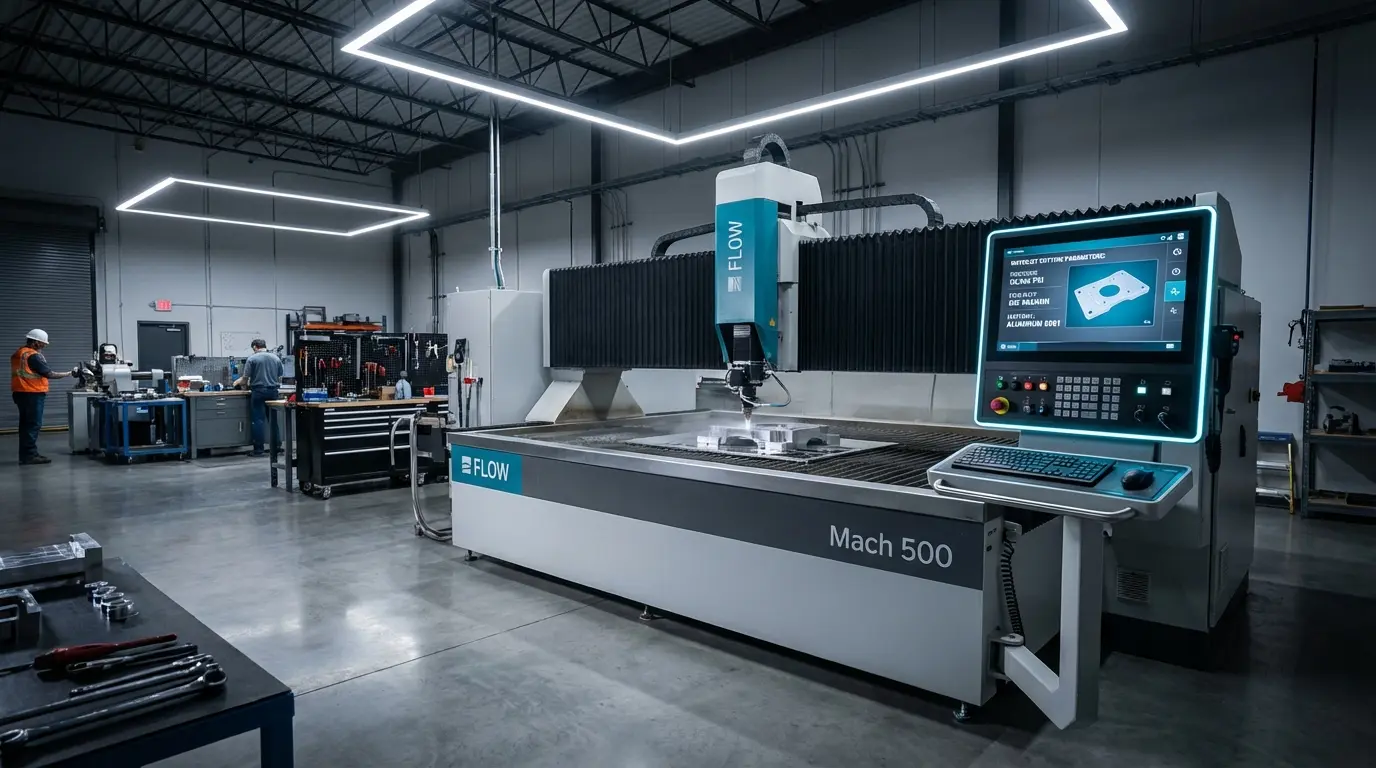
Industrial Marble Water Jet Cutting Machine specifications display
Water Jet vs. Traditional Bridge Saw: The ROI Analysis
Analyzing Equipment Strengths
When evaluating an abrasive water jet vs bridge saw for marble, facility managers should recognize that these machines serve different—yet highly complementary—purposes. A traditional infrared bridge saw offers exceptional efficiency for straight cuts and bulk slab preparation. It dominates the process of breaking down 15-30 mm thick stone slabs into standard rectangular blanks.
However, bridge saws are severely limited regarding intricate designs. Water jet technology holds a distinct operational advantage when processing complex, free-form shapes, tight internal corners, and custom geometric mosaics. Because the water jet produces a smooth, flat kerf with zero burrs and no heat-affected zone, it essentially eliminates the need for manual secondary processing or custom mold creation.
The Hybrid Workflow Strategy
For maximum ROI, top-tier fabrication shops implement a hybrid workflow. They utilize heavy-duty bridge saws for rapid bulk slab preparation and commercial straight cuts. Simultaneously, they deploy 5-axis waterjets for finishing details, luxury mosaics, sink cutouts, and mixed-material architectural components. This division of labor maximizes the lifespan of both machines while drastically increasing overall factory throughput.
Industrial Applications: From Luxury Mosaics to Commercial Slabs
Expanding Capabilities in Stone Fabrication
The versatility of water jet processing allows fabricators to tackle highly profitable architectural niches. From slicing thick commercial slabs to crafting delicate stone furniture (tabletops, chair surfaces, and custom cabinet doors), the technology handles materials of varying hardness and thickness seamlessly. It is widely considered the best water jet for small stone fabrication shops looking to scale into luxury markets, where natural stone is precisely spliced with brass, copper, or architectural glass for intricate wall inlays.
Case Study: 40% Efficiency Boost in Mosaic Production
Consider a mid-sized marble processing facility specializing in luxury hotel lobbies. Previously, crafting complex floral and geometric stone mosaics required rough cutting with saws, followed by intensive manual grinding to ensure tight splicing gaps. By integrating an industrial 5-axis CNC water jet, the facility imported CAD designs directly into the machine’s software. The water jet’s automatic taper compensation (±0.05mm accuracy) produced perfectly flush edges directly off the cutting bed. This one-step forming process eliminated the manual grinding bottleneck, resulting in a documented 40% increase in overall mosaic production efficiency while reducing material waste by 12%.
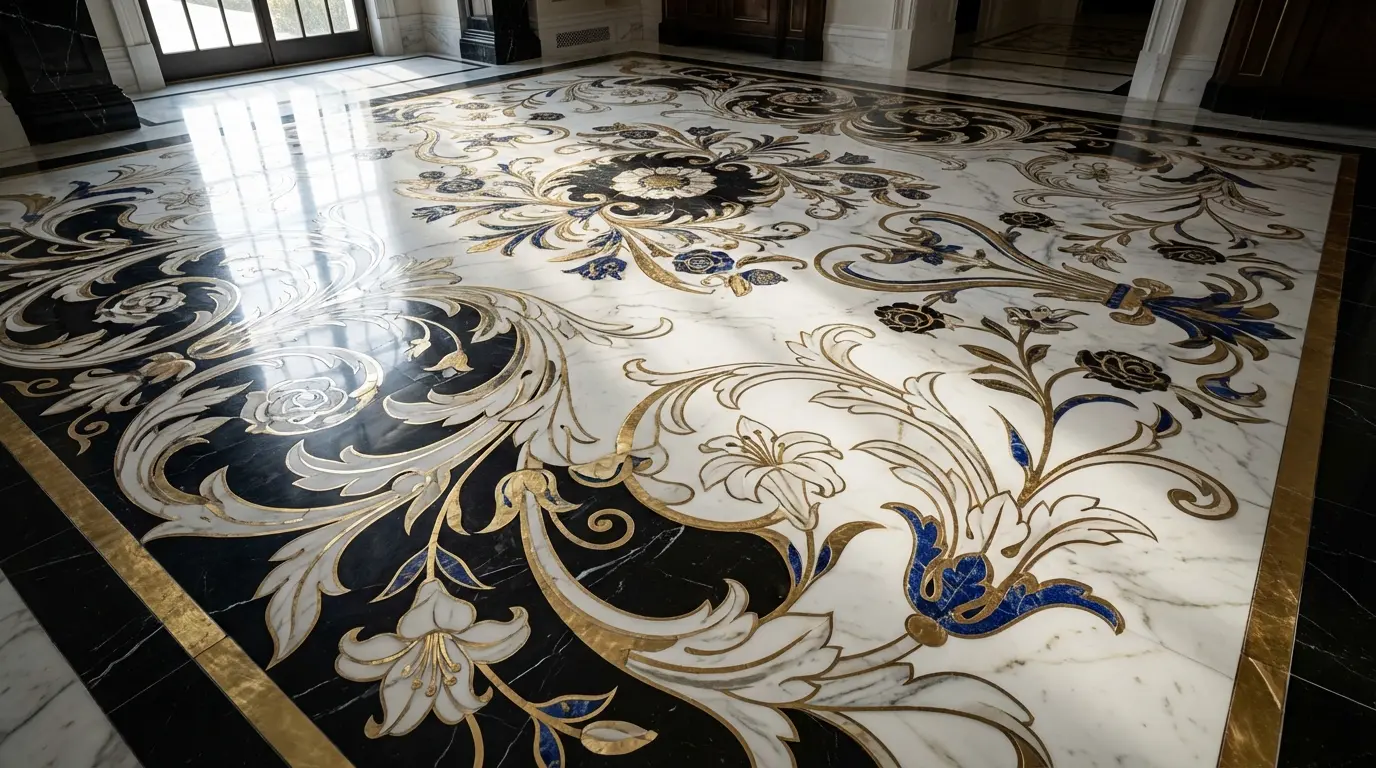
Luxury mosaic produced by a Marble Water Jet Cutting Machine
Understanding MOQ & Logistics: Maximizing Shipping Efficiency
Navigating Minimum Order Quantities
For procurement managers, understanding the marble water jet cutting machine MOQ for global buyers is vital for supply chain planning. The standard Minimum Order Quantity (MOQ) for heavy industrial CNC machinery sourced directly from the factory is typically 1 set. This allows small-to-medium fabrication shops to access factory-direct pricing without committing to massive fleet purchases.
Freight Optimization Strategies
While you can order a single unit, smart buyers optimize their shipping logistics to dilute the per-unit freight cost. A standard water jet machine requires careful crating and ships via a 20ft or 40ft sea container. To maximize the ROI on container space, buyers frequently bundle their machine purchase with a bulk order of abrasive garnet sand (which is heavy and consumes floor space) or spare high-pressure replacement parts. Purchasing two machines, or one machine plus a full pallet of consumables, utilizes the container’s volume efficiently and significantly reduces the landed cost per machine.
Global Buyer’s Guide: How to Source and Import Securely
The 7-Step Secure Import Checklist
Managing the cost of importing water jet cutting machine from China requires a structured procurement process. Follow this 7-step checklist to ensure a secure transaction and seamless installation:
1. Supplier Audit: Verify the manufacturer’s ISO/CE certifications, request factory video tours, and check their track record of exporting industrial CNC machinery.
2. Spec Confirmation: Lock in exact parameters (pump pressure, axis configuration, regional voltage compatibility, and software language).
3. Deposit Payment: Execute a standard 30% T/T deposit to initiate production, utilizing secure commercial banking channels.
4. FAT Inspection (Factory Acceptance Test): Before final payment, request a live video demonstration of your specific machine cutting a marble sample to verify accuracy and pressure stability.
5. Loading & Securing: Ensure the factory provides photographic proof of moisture-proof packaging, vacuum sealing of electronic cabinets, and secure lashing inside the shipping container.
6. Customs Clearance: Work with a licensed freight forwarder in your destination country to handle import duties, commercial invoices, and bill of lading transfers.
7. Installation & Commissioning: Coordinate with the manufacturer for remote video installation support, or arrange for a local technician to handle final leveling, software setup, and operator training.
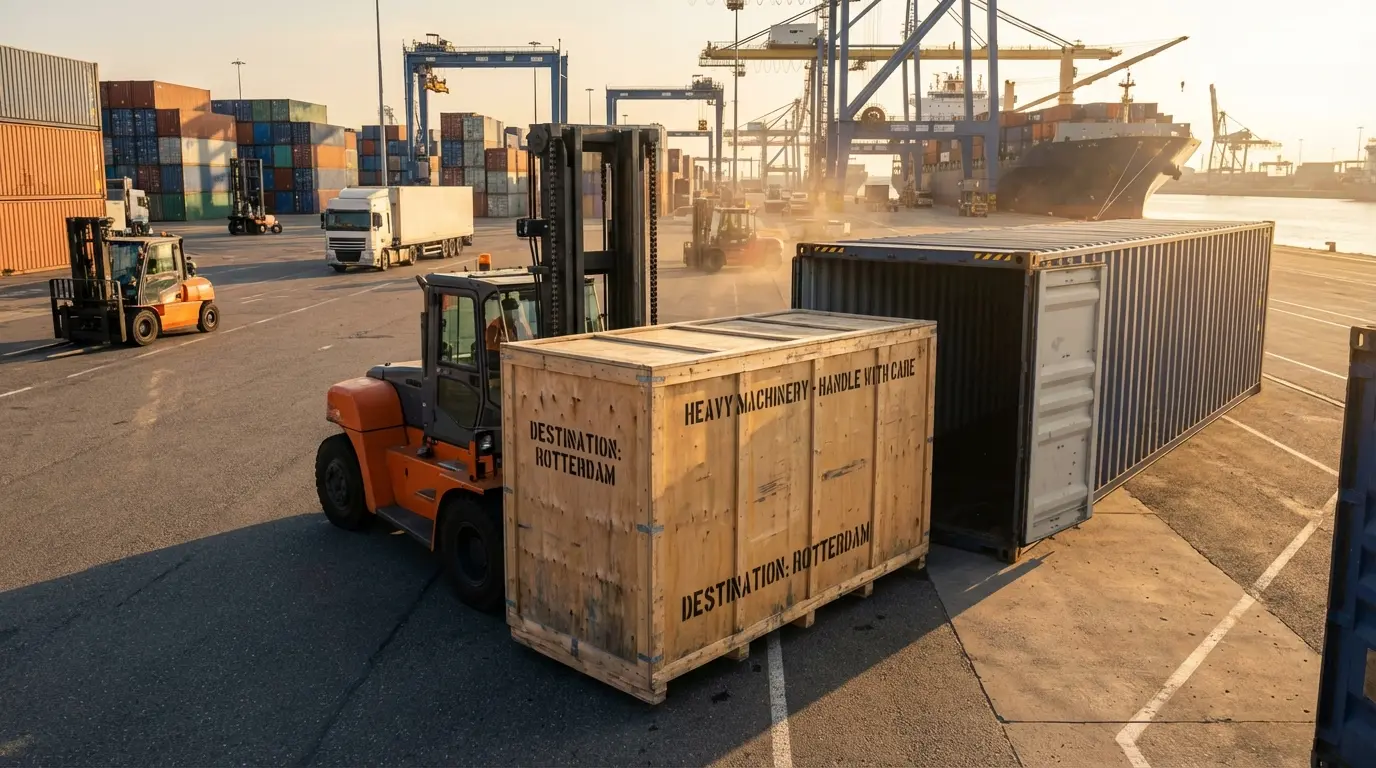
Global logistics for importing a Marble Water Jet Cutting Machine
Essential Maintenance: Maximizing Your Machine’s Lifespan
Establishing Routine Care Protocols
Like any high-performance industrial equipment, a water jet requires strict maintenance to protect your investment. Daily maintenance should include cleaning the machine bed, wiping down the linear guideways, and removing the abrasive sludge and stone debris generated during cutting. If the facility plans a long-term shutdown (exceeding 15 days), operators must drain the water and oil circuits, purge all abrasive lines to prevent clumping, and apply anti-rust and moisture prevention measures to the CNC platform.
Managing Component Lifespans
The primary ongoing maintenance tasks revolve around the high-pressure system. Critical components—such as intensifier seals, check valves, and high-pressure cylinders—have a finite lifespan due to the extreme physical forces at play. Facility managers should plan for a replacement cycle approximately every 2,000 working hours. Additionally, prioritizing water quality (using appropriate water softeners and chillers) will drastically extend the life of your sapphire/diamond orifices and mixing tubes, keeping your hourly operational costs at the lower end of the $12-$30 spectrum.
—
FAQ
Q1: How much does a commercial marble water jet cutting machine cost in 2026?
Factory-direct prices from China currently start around $35,000 to $46,000 for standard 3-axis industrial models. However, global retail prices for fully automated, high-end 5-axis systems can easily range from $50,000 to over $200,000 depending on pump capacity and specific CNC features.
Q2: What is the standard MOQ for importing industrial water jet cutters from China?
The standard Minimum Order Quantity (MOQ) is 1 unit. However, because shipping heavy machinery requires a 20ft or 40ft container, buyers often bundle their single machine order with a bulk supply of abrasive garnet sand to maximize freight efficiency and lower the overall landed cost.
Q3: Can a water jet cutter handle 50mm thick natural marble slabs without chipping?
Yes. General CNC water jets operating between 200-380 MPa can comfortably cut solid stone materials up to 100mm thick. For a dense 30mm to 50mm thick granite or marble slab, the cutting speed is typically adjusted to approximately 25-60 mm/min to ensure a smooth, chip-free kerf.
Q4: Is it better to buy a 3-axis or 5-axis CNC water jet for marble patterns?
A 5-axis machine is vastly superior for intricate marble patterns and mosaics. It features automatic taper compensation, allowing for perfectly vertical, taper-free cuts with an accuracy of ±0.05mm. This eliminates the V-shaped edge common in 3-axis cutting, reducing subsequent manual grinding costs by over 30%.
Q5: What are the primary maintenance costs for an abrasive water jet machine?
Primary operational and maintenance costs include abrasive garnet sand (consumed at 0.3–0.6 kg/min), industrial electricity (30-50 kW/hr), water usage, and the routine replacement of high-pressure pump seals and mixing nozzles. Combined, these factors average between $12 and $30 per hour of operation.
—
Conclusion
Upgrading your stone fabrication facility with a modern Marble Water Jet Cutting Machine offers a distinct competitive advantage in precision, material versatility, and edge quality. By leveraging cold-cutting technology, fabricators can eliminate thermal damage, conquer complex 5-axis mosaic geometries, and drastically reduce the labor costs associated with secondary grinding. Whether you are transitioning from a traditional bridge saw setup or expanding into luxury architectural installations, understanding the specifications, TCO, and import logistics is the key to maximizing your ROI in 2026.
Ready to streamline your production and access factory-direct pricing? Contact MAIS CNC today for a customized quote, detailed machine specifications, and expert consultation on the best water jet configuration for your specific manufacturing needs.